


Laser Eye Surgery Recovery: How to Get the Best Results
SMILE and LASIK

Choosing the best surgeon and clinic to fit your needs can be tough. But once you have found somewhere that you feel confident and comfortable and have scheduled surgery, it is time to understand how best to care for your eyes once your procedure is complete.
At Insight, we provide clear and comprehensive information on aftercare for all patient’s and each individual procedure. This ensures a smooth recovery process as well as optimal vision outcome.
For patients having SMILE or LASIK, recovery is generally relatively quick and straightforward. While everyone heals at a slightly different pace, there are a number of simple things you can do to support a smooth recovery and protect your eyes while they settle.
The key isn’t necessarily trying to make your eyes heal faster. It is about giving them the best possible environment to heal well.
1. Follow Your Post-Operative Instructions
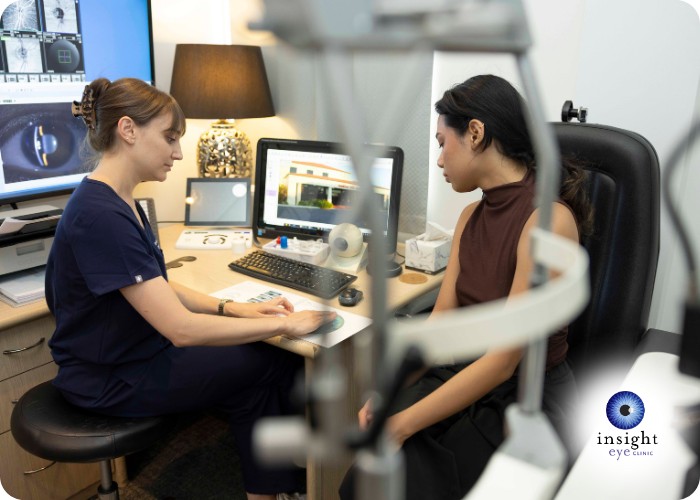
This sounds obvious, but it is probably the most important advice we can give.
Your post-operative instructions are designed to protect your eyes during the early healing period. These may include using prescribed eye drops, avoiding certain activities and attending scheduled follow-up appointments.
Although SMILE and LASIK both offer relatively quick recovery, their healing processes are not exactly the same. This means it is important to follow the instructions given specifically to you, rather than relying on what a friend did after their surgery or what you have read online.
At Insight Eye Clinic, the patient’s journey has always been prioritised. Through getting to know and understand the patient, we are able to customise their vision outcome to ensure their lifestyle is catered for. Not everyone’s needs are the same and it is up to us to pay close attention and really tailor the treatment outcome.
2. Don’t Rub Your Eyes
The moment someone tells you not to rub your eyes, they suddenly seem to become itchy!
After laser eye surgery, however, rubbing your eyes should be avoided, particularly during the early stages of healing.
Your eyes may initially feel slightly gritty, watery, dry or irritated. This can create the temptation to touch them, but it is much better to leave them alone and use any lubricating drops recommended by your clinical team.
This is particularly important after LASIK, where a corneal flap is created as part of the procedure.
With SMILE, there is no LASIK-style flap, but your eyes still need time to heal, so rubbing should still be avoided.
3. Use Your Eye Drops as Directed
 Eye drops are an extremely important part of laser eye surgery aftercare.
Depending on your individual circumstances, you may be given prescribed drops as well as lubricating artificial tears. These should be used exactly as directed, even if your eyes already feel comfortable.
Once your surgery booking is confirmed, you will be provided a medication chart which clearly outlines when to take which eye drops. The chart will also advise you when to cease use of each drop.
And one small but important tip: always wash your hands before putting anything near your eyes.
 4. Give Your Eyes Some Downtime
 4. Give Your Eyes Some Downtime
You don’t need to spend days lying in a dark room after SMILE or LASIK, but allowing your eyes some rest immediately after surgery is sensible.
It is common to experience some temporary blur, watering, light sensitivity or fluctuations in vision during the early stages of recovery.
Having a quiet day after surgery, avoiding unnecessary visual strain and getting a good night’s sleep can make those first few hours much more comfortable.
Once surgery is complete, we advise patients to go straight home and relax without screens for the remainder of the day. You might choose to listen to a podcast, music or nap. Regardless, enjoy the downtime and get used to the eye drop routine.
5. Be Sensible With Screens
 One of the most common questions patients ask is:
“When can I use my phone after laser eye surgery?”
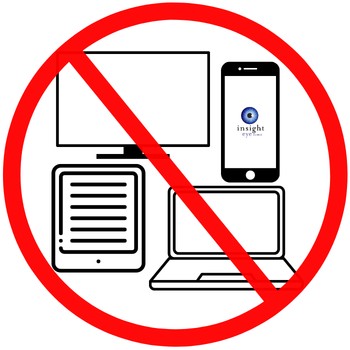
Using your phone or computer is not going to undo your laser treatment, but staring at a screen for long periods may make freshly treated eyes feel dry and tired.
During the first few days, regular breaks from phones, computers and tablets can make your eyes feel more comfortable and reduce the amount of dryness your eyes experience. Less dry eye means clearer vision and less need for lubricating eye drops.
When you do return to screen-based work, remember to blink regularly, take breaks and use lubricating drops as necessary.
In other words, your emails and social media can probably wait for a little while after surgery.
Spotify’s Top 10 rated Podcasts
6. Be Careful Around Water
 You can still shower and wash as normal after laser eye surgery, but you will generally need to be careful about getting water, soap, shampoo and other products directly into your eyes during the early recovery period.
Swimming also needs to be avoided for 1 week (unless otherwise advised).
Pools, spas and natural bodies of water can expose your eyes to bacteria and other contaminants while they are still healing.
7. Give Makeup a Short Break
 You should not wear any makeup at all and avoid eye creams for the first 24 hours after surgery. We also advise that any false eyelashes be removed prior to surgery. This is because they hold additional bacteria as well as requiring regular cleansing. You must avoid rubbing your eyes for the first 7 days after surgery.
You are welcome to have your eyelashes tinted and/or permed at least 7 days BEFORE your procedure.
For the first 3 days following SMILE laser eye surgery, we advise that you do not wear any eye makeup such as mascara, eyeliner or eye shadow. You may continue to wear lip products, foundation and cream blush. Please do not use powder makeups for the first 3 days to avoid loose particles getting into the eyes.
After 3-5 days, you may resume your usual makeup routine remaining vigilant for up to 2 weeks. Be very gentle when cleansing/removing makeup from the eyes.
8. Don’t Rush Back Into Exercise
 24 hours after surgery, light activities such as walking and stretching are generally fine. For the first couple of days, the most important things are rest, downtime and keeping up with your eye drops.
After SMILE, activities such as stationary cycling, light weights, jogging, golf and yoga can usually resume from day 3. Following LASIK, these activities are generally delayed until around day 7.
More strenuous activity increases the chance of sweat, dust or debris entering the eyes, so temporary restrictions help protect the healing process.
After SMILE, activities such as cycling, swimming and tennis can usually resume after one week. Following LASIK, contact sports may need to be avoided for up to four weeks.
Think of it as a short break rather than lost training time.
 9. Wear Sunglasses Outside
 9. Wear Sunglasses Outside
Your eyes may be more sensitive to bright light immediately after surgery, so sunglasses can make being outdoors much more comfortable.
They also provide a useful physical barrier against wind, dust and the natural instinct to touch your eyes.
It’s one of the rare occasions when sunglasses are both practical and stylish.
10. Attend Your Follow-Up Appointments – Even If Your Vision Feels Amazing
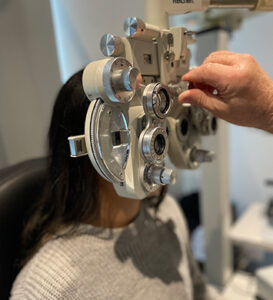
This one is particularly important.
Feeling great and seeing clearly does not mean your follow-up appointments are unnecessary.
Post-operative reviews allow your clinical team to examine how your eyes are healing, check your vision and identify anything that may need attention.
Good aftercare isn’t simply about treating a problem if one occurs. It is about monitoring your recovery to make sure everything is progressing as expected.
How Quickly Does Vision Recover After SMILE and LASIK?
Both SMILE and LASIK are known for relatively rapid visual recovery, but the experience can vary between patients. Overall, the total healing process is 3 months.
It can take 7-14 days for visual clarity to peak but a lot of patients experience better than 20/20 vision after 24 hours of their procedure.
SMILE Recovery
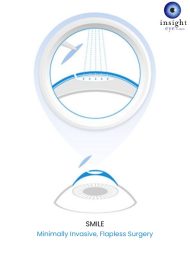 SMILE uses a very small incision rather than creating a corneal flap.
Many patients notice a significant improvement in their vision soon after treatment, with further improvement over the following days.
Vision may initially feel slightly hazy or fluctuate while the eyes settle, but this generally improves as healing progresses.
LASIK Recovery
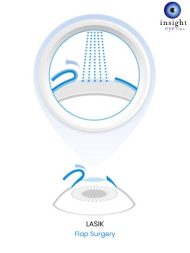 LASIK also offers fast visual recovery, and many patients notice a significant improvement by the following day.
Because LASIK involves creating a corneal flap, patients need to be particularly careful not to rub or disturb their eyes during the early recovery period.
Your individual recovery will depend on factors including your prescription, eye health and how your eyes naturally heal.
When Can I Drive After Laser Eye Surgery?
 You should not drive yourself home after SMILE or LASIK.
Before returning to driving, your vision needs to meet the appropriate driving standard and your clinical team needs to be happy with your recovery.
For many patients this happens relatively quickly, but the exact timing will vary.
Do not assume that simply because your vision feels clearer you are automatically ready to drive. Your post-operative review is an important part of this decision.
When Can I Return to Work?
The right timeframe depends on what you do. Many patients having SMILE or LASIK return to work fairly quickly, particularly if their job is office-based. Within 1-2 days is fine but with regular breaks from screens and eye drop maintenance.
Someone working at a computer in an office may return sooner than someone working in a dusty environment, around machinery or in a role where there is a risk of being struck in the eye. We can provide a medical certificate stating the required time off from your procedure for your workplace.
When planning your surgery, it is worth discussing your occupation with your clinical team so you know what to expect.
What Symptoms Are Normal After SMILE or LASIK?
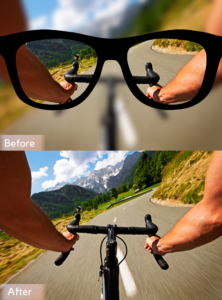 During the early recovery period, some patients may experience:
- • Mild blurriness
- • Fluctuating vision
- • Dryness
- • Watering
- • Light sensitivity
- • A gritty or irritated sensation
These symptoms often improve as the eyes heal.
However, significant pain, a sudden reduction in vision or symptoms that are becoming worse rather than better should always be reported to your treating clinic promptly.
If something does not feel right, it is always better to ask.
A Good Recovery Starts Before Surgery
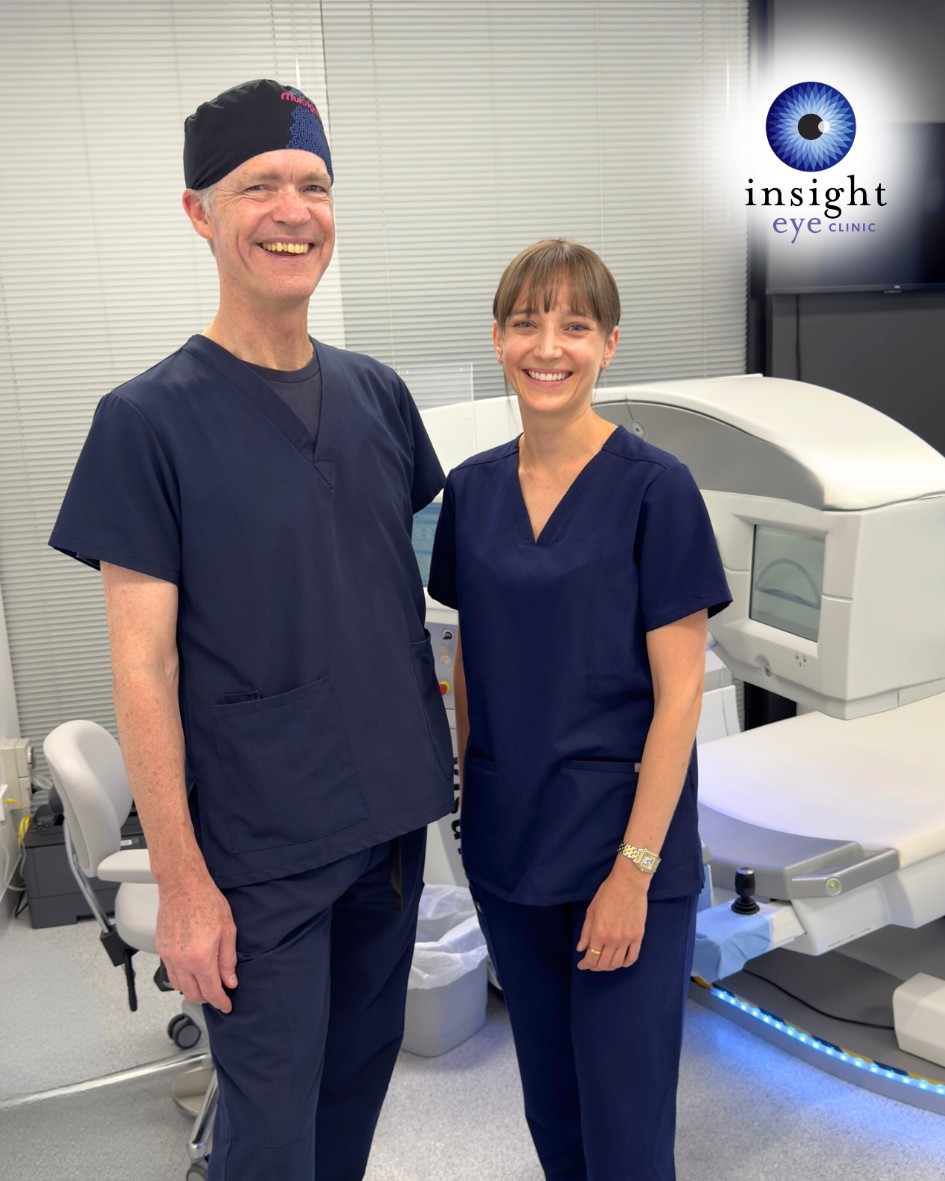 Interestingly, one of the most important parts of recovery happens before you ever enter the laser suite.
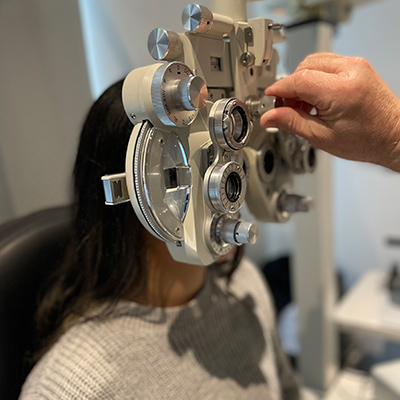
A comprehensive assessment helps determine not only whether you are suitable for laser eye surgery, but which procedure is most appropriate for your individual eyes.
SMILE and LASIK can both provide excellent visual outcomes for suitable patients, but they are not identical treatments.
Your prescription, corneal measurements, eye health, lifestyle and individual visual needs all play a role in deciding which approach is most suitable.
Once surgery is complete, your part is relatively simple: follow your instructions, protect your eyes, attend your reviews and give your vision time to settle.
Laser eye surgery may only take a short time to perform, but careful pre-operative assessment and good post-operative care are important parts of achieving the best possible visual outcome.