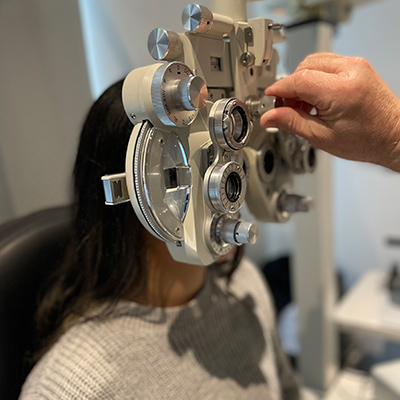
Laser eye surgery is one of the most commonly performed elective procedures in Australia, and serious complications are rare. Most side effects are temporary: dry eyes, glare or halos around lights at night, and some fluctuation in vision while the eye heals, all of which usually settle over the first few weeks to months. Less common risks include under-correction or over-correction, which can often be addressed with a follow-up procedure, infection, and corneal ectasia. There have been no reported cases of anyone going blind from LASIK in Australia since it was approved here in 1999. Thorough testing before surgery is what keeps the risk low, because it identifies the people for whom surgery is not a good idea before anything goes ahead.
What are the risks of laser eye surgery?
Here are some of the potential risks of proceeding with laser vision correction. Types of laser correction include: SMILE, LASIK or PRK.
Over or Under-correction
Not everyone achieves a complete improvement in vision after laser eye surgery. The amount of vision correction can vary depending on individual conditions. A residual refractive error can remain, which means some patients will still need glasses or contacts after surgery. If this is the case, follow-up surgery to correct the remaining residual refractive error can be considered.
Glare and halos at night
Some people experience difficulty with night vision or driving at night, and see glare and/or halos around lights in the dark. It is more common in the early post-operative time period and it gradually improves in the majority of cases. This does not mean that you will be unable to drive. Most patients meet Australian driving standards within 24 hours of their procedure.
 Double vision and ghosting
 Double vision and ghosting
This is a very rare potential side effect but one worth listing. Ghosting falls under the same category as double vision. For ex: white writing on a black background (vice versa) can become shadowed.
Dry Eye
You should be tested by your treating clinic for dry eyes at your primary consultation (before surgery). Dry eyes to a certain degree, is normal for everyone and can occur for various reasons. It is the most common symptom following laser eye surgery.
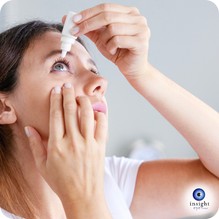 Dry eyes can be easily treated with lubricating eye drops. It is mostly considered a part of the initial healing process following laser eye surgery. Your eyes might feel dry, scratchy and watery. Dry eye syndrome often causes our eyes to water. The watering is our bodies response to the dryness and a way to increase lubrication, thus attempting to treat the dry eye.
Corneal ectasia
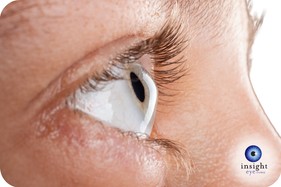
Corneal ectasia is a term used to describe a group of eye conditions that cause progressive thinning of the cornea, weakening the front of the eye and causing it to bulge forward.
It is greatly difficult to foresee a post-operative development of corneal ectasia in most patients. Most risk factors are high-lighted during the consultation and would therefore; deem a patient not suitable for laser vision correction.
Thorough pre-operative scans and examinations should highlight this potential risk, meaning the percentage of people who get this is very low.
Ectasia may occur any time from shortly after surgery to years later. Glasses, contact lenses, or even a corneal transplant may be required to restore vision if it occurs. A careful preoperative examination can reduce the chances of developing corneal ectasia after laser eye surgery.
Infection
The probability of infection following laser eye treatment is very very low. Prescribed eye drops given after the procedure help prevent infection amongst other things.
It is important to consult the surgeon if the eye turns red, is painful or there is a reduction in vision. Infections can be cured if diagnosed at an early stage but must be promptly treated. You should ensure you are provided with an out of hours contact number to address any concerns outside of clinic hours.
LASIK flap complications
Flap-related complications can occur after the LASIK procedure because a flap is created in the cornea. These include infection, inflammation, and dislocation of the flap. It is often treated with either eye drops or additional surgery. As mentioned in the other potential risks and side effects; this is an unlikely occurrence if you follow the post-operative guidelines.
Can laser eye surgery cause blindness?
 Laser eye surgery is not without its risks. However, there are no reported cases of anyone going blind from having LASIK since it was approved in Australia in 1999. SMILE laser eye surgery was introduced to Australia in 2014 and the results have been nothing short of outstanding.
The development of refractive surgery
Prior to an excimer laser being used for laser eye surgery, procedures were done through creating small incisions on the surface of the cornea (stroma). This procedure is called Radial Keratotomy (RK) and was developed in 1974 by Svyatoslav Fyodorov, a Russian ophthalmologist. These incisions were designed to relax the cornea, causing a flatter surface of the eye which relieved near-sightedness.
This procedure and the findings from it, led to the development of PRK (photo-refractive keratectomy) which later lead to the development of LASIK (laser assisted in-situ keratomileusis).
Explore → Can laser eye surgery cause blindness?
Who is not suitable for laser eye surgery?
 At Insight Eye Clinic, we ensure that comprehensive testing is carried out by both our clinical Orthoptist and our head surgeon, Dr Graham Furness. Several diagnostic tests are performed which tell us everything we need to know about your cornea, the shape of your eye and your prescription. With different laser eye surgery methods available to suit most eyes; the vast majority of people are suitable for at least 1 method of laser eye surgery. We will provide you with a guide to the reasons that a person might be an unsuitable candidate for laser eye surgery.
Age
Most reputable ophthalmic surgeons have a minimum age of 18 for laser eye surgery. There is not a maximum age for surgery, although beyond a certain age, vision problems may be due to other factors that laser eye surgery cannot assist with correcting. More often than not, there is a surgical solution to your vision problems. Always consult an eye specialist for advice and recommendation.
Explore → Who is not suitable for laser eye surgery?
How Australia Protects Eye Surgery Patients
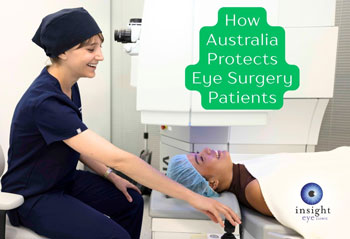 When researching eye surgery, many Australians are surprised to discover just how different healthcare systems can be from country to country.
From advertising regulations and informed consent requirements through to surgeon oversight and post-operative care standards, ophthalmology in Australia operates within one of the most highly regulated healthcare environments in the world.
While Europe is home to many excellent ophthalmic clinics and surgeons, healthcare governance is not identical across all countries – and the rules protecting patients can vary significantly depending on where treatment is performed.
Understanding these differences is important for anyone considering procedures such as laser eye surgery, cataract surgery, refractive lens exchange (RLE) or implantable contact lenses (ICL).
Explore → How Australia Protects Eye Surgery Patients
Common worries before surgery
Can you blink during the procedure?
It is one of the most common concerns of patients looking to undergo laser eye surgery. And we understand… Thankfully, the process has been built with the patient in mind. The comfort, ease and outcome for the patient is at the forefront of decision making. Something simple like blinking could never get in your way.
What do we do to stop you from blinking?
In order to keep the eyelids open, a small metal medical device called a speculum is used to separate the eyelids. It looks like a small clip and may have an adjustable side to hold the lids firmly apart. Firstly, Your ophthalmologist adds anaesthetic eye drops to the treatment eye which will numb the eyeball. The eyelids and surrounding area are then thoroughly cleansed with chlorhexidine which is an antiseptic and disinfectant. Your eyelashes will be gently taped to ensure they are not in the way of the laser. This is how each eye is prepped prior to the laser being applied to the cornea.
Explore → Can you blink during the procedure?
Pregnancy and breastfeeding
If you’ve ever been pregnant, then you know that the hormonal increases in estrogen and progesterone can effect any and every part of your body at any given time. If you haven’t and are planning a pregnancy or currently pregnant, then you are about to embark on ~40 weeks of feeling ‘not quite yourself!’ But did you know that blurred vision and other eye related issues might crop up? These changes mean that laser eye surgery during the time of pregnancy and breastfeeding is not recommended.
Swelling of the Cornea
The body produces approximately 50% more blood and body fluids during pregnancy meaning that swelling is very common for almost all women. We presume the face, hands, feet, ankles and legs will be the main places effected. What we don’t often know is that our cornea (the clear window across the front of the eyes) also becomes susceptible to fluid retention making it thicker and possibly altering the curvature. An increase in the fluid pressure inside of the eye can also cause blurred vision.
Explore → Pregnancy and breastfeeding
How the risks compare with wearing contact lenses
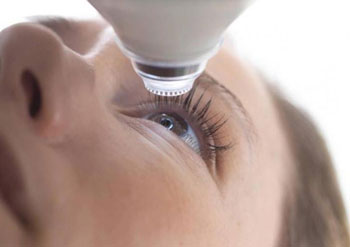 Are you a part of the 61% of Australians that use either prescription glasses or contact lenses?
It seems that the number of people wearing glasses and contact lenses is on a steady increase according to the Australian Institute of Health and Welfare (AIHW). More than 61% of Australian’s are currently spending every day with restricted uncorrected vision causing them to reach for the glasses or contact lenses. And they’re not cheap either!
Glasses costs…
The average price for glasses nationally is $196, according to Vision Service Plan. But if you require extra coatings for glare when night driving, anti-scratch, UV protection or lenses to be ‘thinned down’ if you have a very high prescription; then the price can be bumped up a whole lot more. And that’s without the additional frame costs.
Explore → How the risks compare with wearing contact lenses
Is Laser Eye Surgery Worth It?
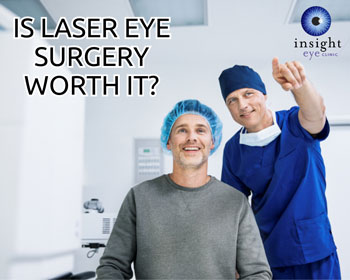
What does laser eye surgery involve?
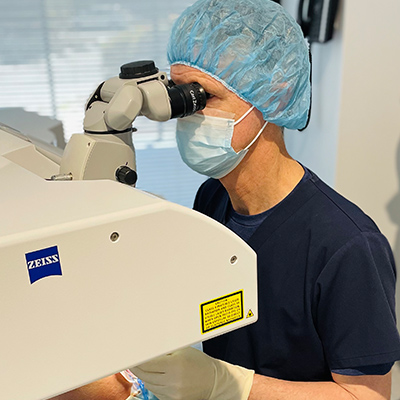
Firstly, Dr Furness adds anaesthetic eye drops to the treatment eye which will numb the eyeball. You will be awake during the procedure but sedated.
Dr Furness will already have entered all of the measurements from several scans and tests performed at your consultation, into the laser. These measurements ensure that the exact amount of corneal tissue is removed. This is a microscopic amount of tissue. The removal of the corneal tissue is how the surface of the eye is reshaped. And this is how your vision is corrected.
This process is relevant to all laser eye procedures, whether that be SMILE, LASIK or PRK.
What are the long-term effects of wearing contact lenses?
Contact lenses can cause lasting damage. Serious infections that can lead to blindness affect 1 out of every 500 contact lens users a year in Australia. Statistics show that laser eye surgery is safer than continued contact lens wear. You can improve your life by not having to worry about vision aids such as glasses and contact lenses every day.
How long do the results from laser eye surgery last?
Technically speaking, laser eye surgery is permanent. During your primary consultation, we will establish if your prescription is stable (less than 0.50 dioptres of change within 1 year + no more than 0.75 dioptres of change within 2 years). As long as your vision has remained stable, surgery can proceed.
Corneal tissue is permanently removed from the surface of the eye in order to reshape the cornea. The tissue cannot regrow. However; in some cases, people who spend extended amounts of time on computers/laptops/devices without regular breaks can force short-sight upon themselves again.
Explore → Is Laser Eye Surgery Worth It?
Claims to watch for when comparing clinics
 Whilst conducting weekly research on the refractive surgery market, competitors and advancements, I regularly find information on websites that is quite misleading. From a consumer perspective, it must be so difficult to find a clinic and surgeon that offer amazing results as well as patient care, great follow-up and honest advice.
It seems that every laser eye surgery clinic states that they are the ‘leaders’ or ‘leading’ the way in refractive surgery. How are you supposed to know? And, does it matter? Shouldn’t all surgeons be great in their own right? We are going to help you read between the lines. To try to help from the beginning of your journey when you are showing interest and ready to do a little bit of research.
Offering an upfront cost that is much lower than other clinics
What is the quote for? Because there is more than one type of laser eye surgery to correct your vision. And different surgery types come with different risks, downtime, aftercare and comfort levels.
There are three types of laser eye surgery that will correct your vision impairment. Vision impairment includes short-sight (myopia), long-sight (hyperopia) and astigmatism.
Explore → Claims to watch for when comparing clinics
More questions about laser eye surgery
 We have combined the most frequently asked questions about laser eye surgery from Google into one easy to understand post… We hope this helps!
PSA: these questions have been copy and pasted directly from Google for authenticity. We have shortened ‘laser eye surgery’ to LES in several places.
1. How much does laser eye surgery in WA cost?
The cost of surgery is dependent on which procedure type is recommended to you. There are 3 different generations of laser: SMILE/SmartSight, LASIK and PRK. They range in price from $2,850 per eye to $4,400 per eye.
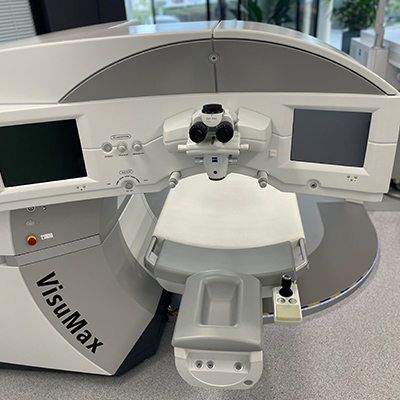
The most recent technique is called ReLEx SMILE (another brand is known as SmartSight). These procedures are on the upper end of the scale. It was recently announced that in recent months (2024), Visumax recorded their 10 millionth SMILE procedure! A huge milestone.
Most clinics provide payment plans to help spread the costs of surgery. They are often 0% interest for a designated period.
Explore → More questions about laser eye surgery
Ok… you’ve been wearing glasses and contact lenses for years. Your contacts are a pain to bring on holiday, you never clean them and your glasses don’t highlight your amazing eyes. We know.
You lost a contact lens playing rugby and had to run around panicking for the rest of the match. We hear you.
You have terrible peripheral vision with your glasses and driving feels stressful. You can’t see anyone in the swimming pool and just have to hope that you don’t brush up against the really hairy bloke. WE KNOW!
Life really doesn’t have to be this hard.
Laser eye surgery is a clinically proven and established method of treating short sight, long sight and astigmatism as well as certain vision disorders. Like all surgeries however, laser eye surgery is not completely free of risks and side effects. It is important to know, before any procedure, exactly what the potential risks are. You want ease of life and the best for your eyes… but you also need to know the few risks that can occur.

FUN FACT: You have a higher chance of infection and vision related issues from contact lenses than laser vision correction.
Benefits outweigh the risks
 Every choice we make has some degree of risk.
It’s up to us to decide whether or not the benefits outweigh those risks. Ensure that you are attending a consultation with a surgeon and clinic that prioritise patient safety, technology and pre/post-operative care.
The most common statement we hear from our patients after they’ve had their laser eye surgery procedure is, “I wish I had done this sooner!” You cannot regain the time you’ve been wearing glasses or contact lenses, but you can make the choice to find out if you are eligible for visual freedom.
Please see other laser eye surgery blogs such as:
All about third generation laser eye surgery
**None of the information in this blog post is to be construed as medical advice, nor is it intended to replace the recommendations of a medical professional. For specific questions, please see your eye care practitioner.**