


FineVision Trifocal Intraocular Lenses
Get Amazing Vision

Above: Close up of the trifocal design in FineVision. Inset: Actual size FineVision IOLs
 At Insight Eye Clinic, our Chief Refractive Surgeon Dr Graham Furness MBBS (WA) FRANZCO, likes to remain as objective as possible about each new product that becomes available on the market. Despite all approved products going through rigorous safety and quality checks (mostly performed by the FDA), sometimes years of studies and trials with many volunteers reporting on dozens of different aspects about their vision and their experiences with the new product, a lot of IOLs and surgical implants that make it to the market can soon flop.
So when Dr Furness was approached with the FineVision Trifocal IOL (intraocular lens) by Bausch & Lomb, he reserved the same amount of healthy scepticism as he usually does. Upon reviewing the new FineVision Trifocal IOL in detail, reading post-op reports on hundreds of recipients and studying each detail about pre-operative measurements, Dr Furness finally decided that this lens was worthy of an in-house trial.
So… ‘how do these trifocal lenses work?’
Before we can answer that question, we think it’s best to explain what presbyopia is and who will benefit from this trifocal IOL.
What is Presbyopia?
Presbyopia literally means ‘old eye’ and is a phenomenon that affects us all, mostly in our early to mid 40’s. Age-related changes occur within the proteins in the lens inside the eye, making the lens harder and less elastic over time. Age-related changes also take place in the muscle fibres surrounding the lens. With less elasticity, the eye has a harder time focusing up close. Presbyopia affects over 1.8 billion people worldwide.
Presbyopia makes helping patients become completely spectacle independent slightly more difficult, especially if that person has poor distance and intermediate vision as well.
Thankfully, there is a worthy solution!
The FineVision Trifocal IOL features a series of rings which diffract light to provide far, intermediate and near vision. The design of FineVision is different to multifocal or bifocal glasses. You don’t have to worry about moving your head to see clearly or even walking down stairs, as the lens is implanted in the eye. Many patients implanted with FineVision don’t need to wear glasses for everyday tasks such as driving, reading the car speedometer or even using their smart phone. Those undergoing lens replacement surgery for cataracts can also benefit from this trifocal IOL.
How will your Doctor Find the Perfect IOL for You?
Pre-operative measurements are crucial.
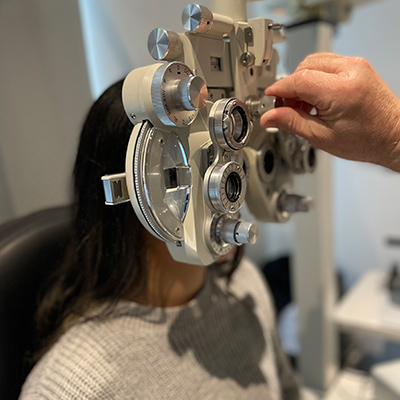
Prior to having this vision changing procedure, a consultation must be held with Dr Furness where a series of tests are completed using the most up to date diagnostic equipment including the 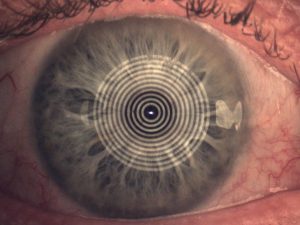 Haag-Streit LENSTAR which is the newest technology allowing hundreds of measurements to be taken both measuring the surface as well as the inside of the eye. Accurate IOL prediction is crucial for patient satisfaction in state of the art lens replacement surgery. LENSTAR provides all measurements needed to take full advantage of latest generation IOL prediction methods for improved refractive outcomes in one click. This fantastic diagnostic machine combined with the Surgeons experience makes for a winning combination.
…not everyone is suitable
Another important part of your consultation is your ocular history and your doctor should perform a dilated retinal check (meaning they dilate your pupils with an eye-drop to ensure the health of the inside and back of the eye). Some common reasons that a patient might NOT be suitable are:
• Pre-existing pathology or physiology which may aggravate the implant
• Chronic uveitis (An inflammation of the middle layer of the eye (uvea))
• Uncontrolled glaucoma
• Extremely narrow angles (restricts flow of fluid around the eye)
• Congenital bilateral cataracts (born with cataracts)
• Previous history of, or a predisposing to, retinal detachment
• Patients with only one eye with potentially good vision
Choose an Experienced Accredited Surgeon
While leading technology is essential, it is the surgeon that will make the critical difference to your vision result.
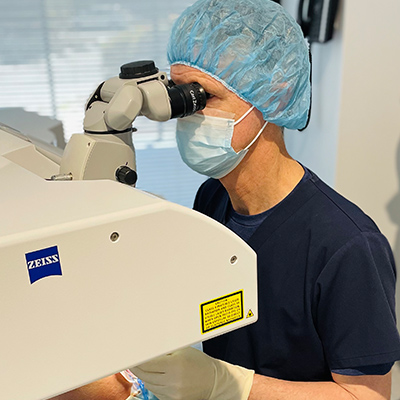
When you visit Insight Eye Clinic, you will receive the best possible care from the staff and most importantly, Dr Graham Furness himself. Dr Furness leaves nothing to chance and therefore performs all of his own consultations and hand chooses each lens for every patient he sees to maintain our exceptionally high surgery success rate. Dr Furness began his first practice, Insight Eye Clinic, in 1999 and has been performing refractive surgery since 1996. He specialises in cataract surgery, laser eye surgery, implantable contact lenses (ICL), refractive lens exchange (RLE), pterygium removal, intravitreal injections and conjunctival graft, just to name a few.
It is also important that you feel comfortable and well informed upon meeting your Doctor and the staff. They are with you throughout your journey and should be able to share their unbiased knowledge and instil trust and confidence.