Laser Eye Surgery – Am I Too Old?

Am I Too Old for Laser Eye Surgery?
 It’s a question we hear often in consultation: “Am I too old for laser eye surgery?”
For many people, the assumption is that once you reach your mid 40s, laser vision correction is no longer an option. In reality, age on its own is not the deciding factor. What matters far more is how your eyes are changing and what you want from your vision moving forward.
Understanding those changes is the key to choosing the right solution.
How Vision Naturally Changes After 45
 From around the age of 45, most people begin to notice difficulty with near tasks such as reading small print, using a phone or working on a computer. This is known as presbyopia, a normal age-related change that affects everyone, regardless of whether they have always had excellent vision or have worn glasses for years.
Presbyopia occurs because the natural lens inside the eye gradually becomes less flexible. While laser eye surgery can correct distance vision very effectively, it does not stop this natural ageing process of the lens.
This is where the conversation about suitability becomes more nuanced.
Laser Eye Surgery After 45 – Is It Still an Option?
For many people over 45, laser eye surgery is still a very good option, particularly for those who are comfortable wearing reading glasses.
 This approach suits patients who:
• Are happy to use reading glasses when needed
• Want freedom from glasses or contact lenses for distance vision
• Have healthy eyes and suitable corneal measurements
• Have a specific need for uncompromised distance vision (zero compromise on distance vision clarity)
When expectations are clear, satisfaction rates remain high. For some, the simplicity of sharp distance vision with reading glasses is exactly what they are looking for.
When Other Options May Be Worth Considering
For patients who would prefer to reduce their reliance on reading glasses, or who are starting to notice early lens changes, Refractive Lens Exchange (RLE) may be a more appropriate long-term solution.
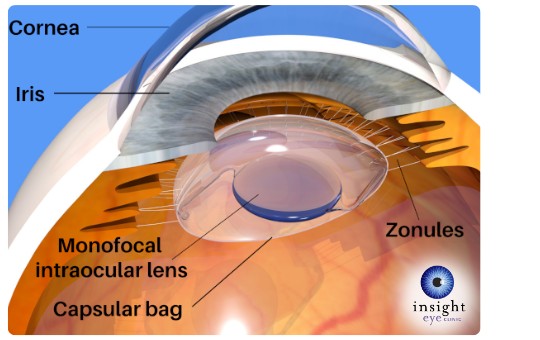 RLE involves replacing the eye’s natural lens with an artificial intraocular lens (IOL). While the procedure is similar to cataract surgery, it is performed electively before a cataract develops, with the aim of correcting vision and addressing presbyopia at the same time.
One of the advantages of RLE is the flexibility it offers when it comes to visual outcomes.
Understanding Intraocular Lens (IOL) Choices
There is no single “best” lens. The most suitable IOL depends on lifestyle, visual priorities and how much independence from glasses a person would like. Suitability for a vision outcome is determined at a consultation with Dr Furness. The patient’s personal preference is our priority but not always the most suitable deciding factor.
Monofocal IOLs
Monofocal lenses are designed to provide clear vision at one distance, most commonly distance. Reading and intermediate tasks will usually still require glasses. These lenses offer excellent clarity and predictability and remain a popular choice for patients who are comfortable wearing glasses for certain activities.
It is not uncommon for some patient’s to choose near vision as their priority and clarity is set to arm’s length. Those patients then wear glasses for intermediate and distance vision instead.
Monovision using Monofocal IOLs
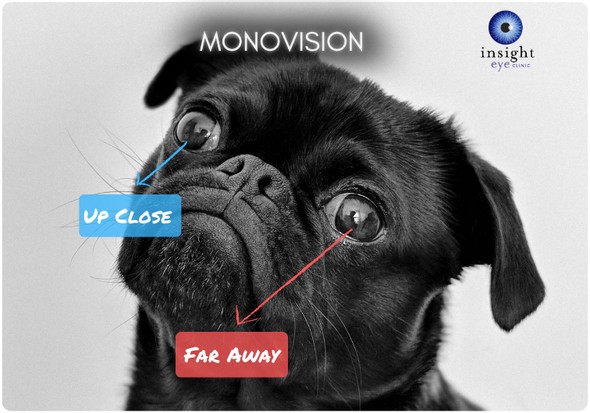 Monovision involves your Ophthalmologist correcting your dominant eye for distance vision and your non-dominant eye for near vision. Eye dominance is easily assessed during a consultation.
The two eyes then work together (binocularly) to create a blend between them, whereby; the eye that is dominant for whatever task you are performing (driving / reading / cooking / reading your phone) allows clear vision.
A monovision outcome using RLE (refractive lens exchange) means that you will experience freedom from glasses! Some patients require their vision to be fine tuned for certain things such as needle work, shooting, reading very small print, 4D experiences etc. In these instances, Dr Furness recommends using ‘top-up’ glasses to bring both eyes to whatever focal depth it is that you require.
Extended Depth of Focus (EDoF) IOLs
EDoF lenses are designed to provide a smooth range of vision, particularly improving distance and intermediate vision. Many patients find they can manage most daily activities, including computer work, with minimal reliance on glasses. Fine near tasks may still require reading glasses, but overall spectacle dependence is often reduced.
Full Range – Trifocal IOLs
Trifocal lenses aim to provide functional vision at distance, intermediate and near. They can be well suited to patients who value a high level of independence from glasses across most activities. There is a level of compromise with clarity for distance vision in most cases with a trifocal IOL.
As with all advanced lens technology, careful assessment and discussion are essential to ensure expectations align with outcomes.
Choosing an IOL is a collaborative process, guided by detailed testing and an honest conversation about how you use your vision day to day.
Why Some Patients Choose RLE as They Age
 An important consideration with RLE is that once the natural lens is replaced, cataracts cannot develop later in life. For many patients in their late 40s, 50s and beyond, this offers peace of mind as well as visual clarity.
RLE can be an excellent option for those looking for a stable, long-term solution that evolves with their vision rather than working around age-related changes.
The Importance of Personalised Advice
There is no age cut-off for laser eye surgery, and there is no single solution that suits everyone over 45. The right choice depends on eye health, prescription, lifestyle, visual goals and comfort with glasses.
A comprehensive assessment allows us to recommend the option that delivers the safest outcome and the most satisfying vision, not just now, but for the years ahead.
If you’ve ever wondered whether you’re too old for laser eye surgery, the better question is: what approach will support the way you want to see as your eyes change?
With the right guidance, there is almost always a solution.

Regardless of what you are recommended by your doctor, it is good to choose a doctor that can offer a variety of surgical options and who has lots of experience and a fantastic track record. We recommend you do your research and ask lots of questions. At Insight Eye Clinic, we are always more than happy to answer any questions you have related to your eyes and your surgery.
Follow us on social media for regular updates on patient journey’s and everything EYES!




Additional blog posts:
Please see other laser eye surgery blogs such as: